
Get Weekly Travel Inspiration Straight to Your Inbox




100+ subscribers
Join 100+ subscribers who receive our curated destination picks, flight deal alerts, and exclusive travel guides — every Thursday.


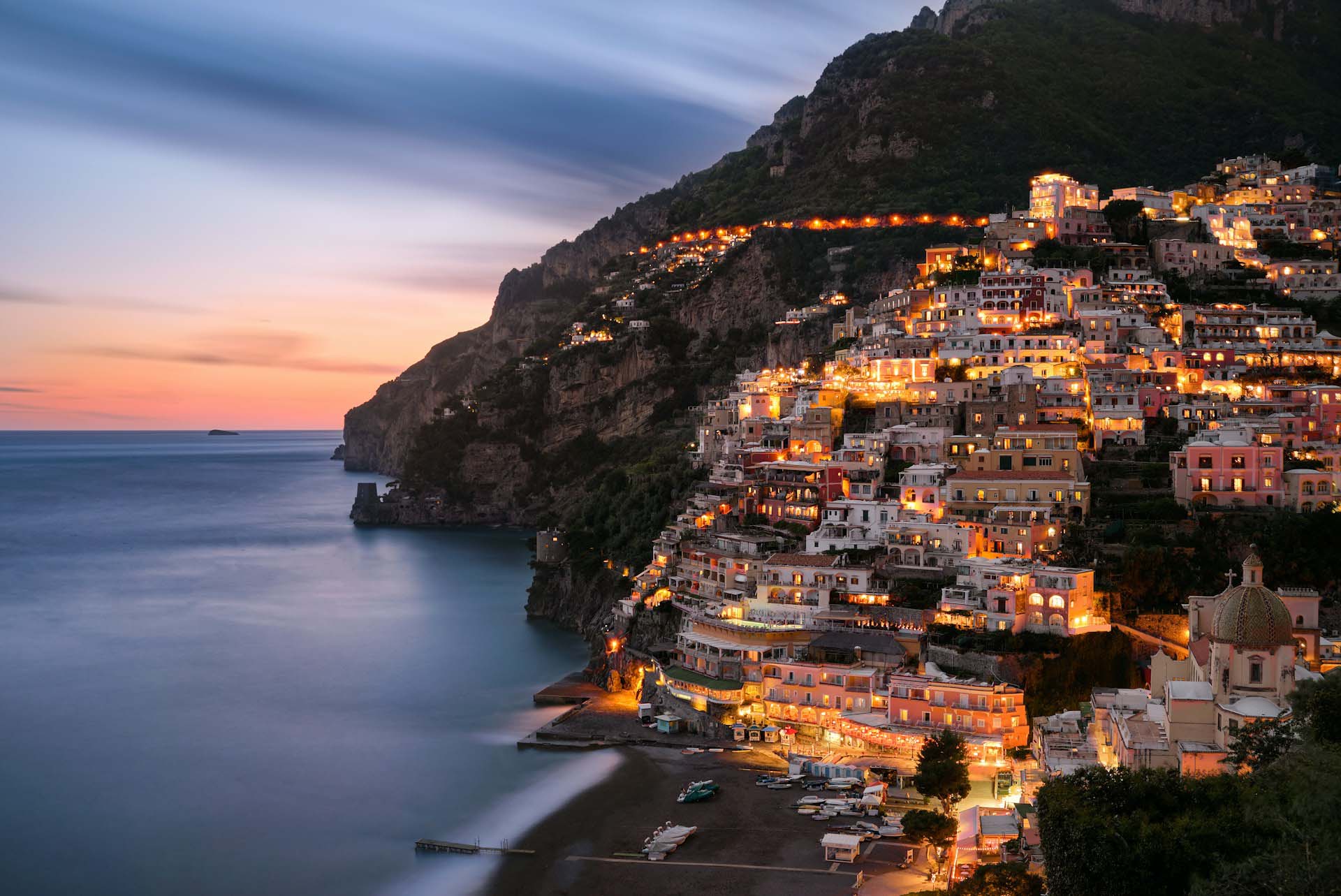
Planning a trip to the Amalfi Coast? From Positano in Campania to the ferry from Naples, this guide covers villages, beaches, parking, tours and prices — plus honest tips from real travelers.
The Amalfi coastline runs for about 50 kilometers along the southern edge of the Sorrentine Peninsula in the Campania region of Italy. It starts near Positano in the west and ends at Vietri sul Mare near Salerno in the east. In between, thirteen small towns cling to cliffs that drop almost vertically into the Tyrrhenian Sea, connected by a single winding road — the SS163 — that was carved into the rock in the 1850s and has been causing traffic jams ever since.
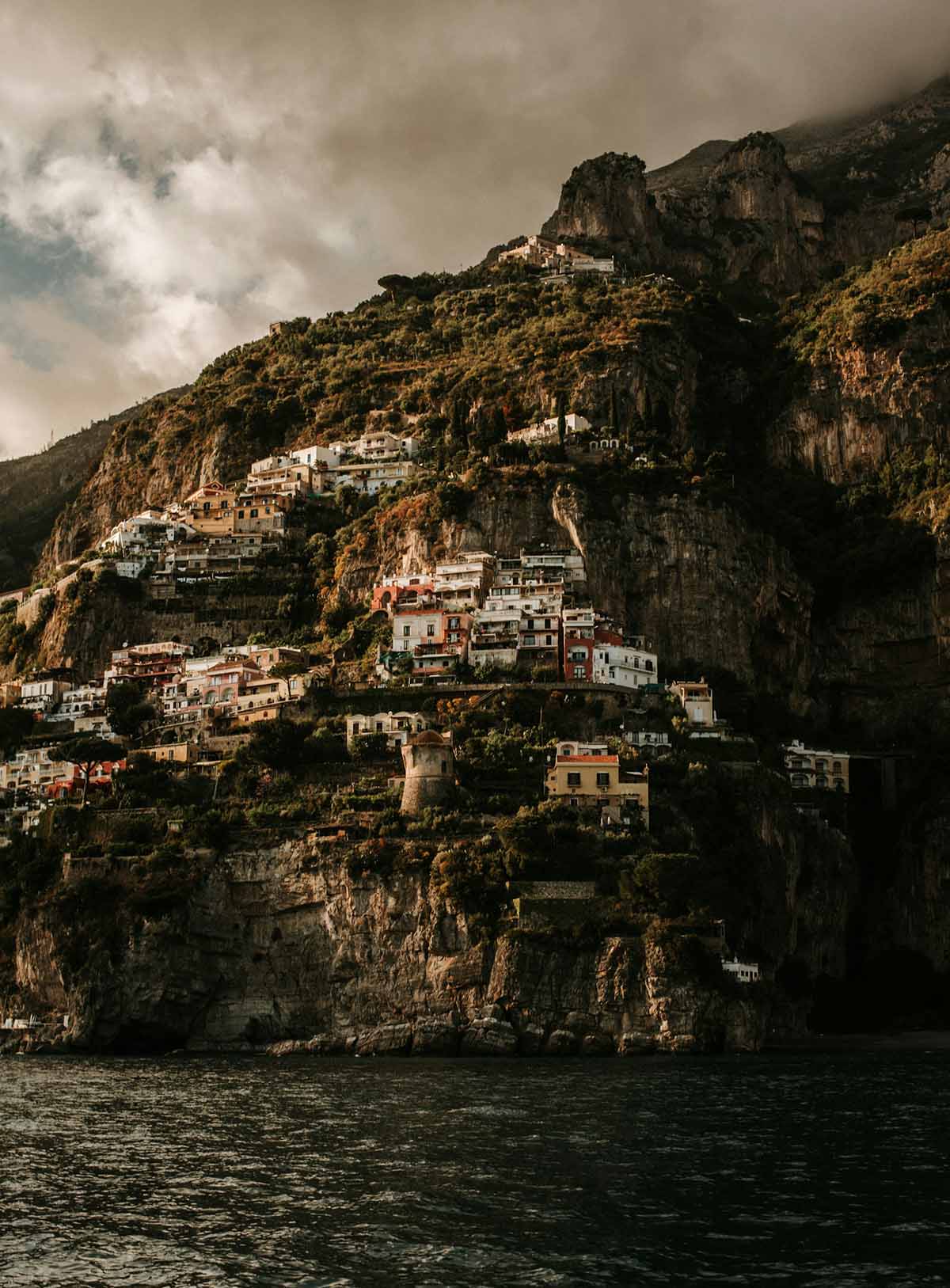
UNESCO declared it a World Heritage Site in 1997, citing it as an “outstanding example of a Mediterranean landscape.” That’s accurate, but it undersells how physically dramatic the place is. The mountains don’t just slope toward the sea here — they fall off it. Houses are stacked on top of each other like someone forgot to stop building. Lemon groves hang from terraces that look impossible to access. It’s one of those places that photographs extremely well and, to its credit, also looks that way in person.
It’s also crowded, expensive, and logistically tricky. None of that should stop you from going. But you’ll have a much better time if you know what you’re getting into before you arrive.
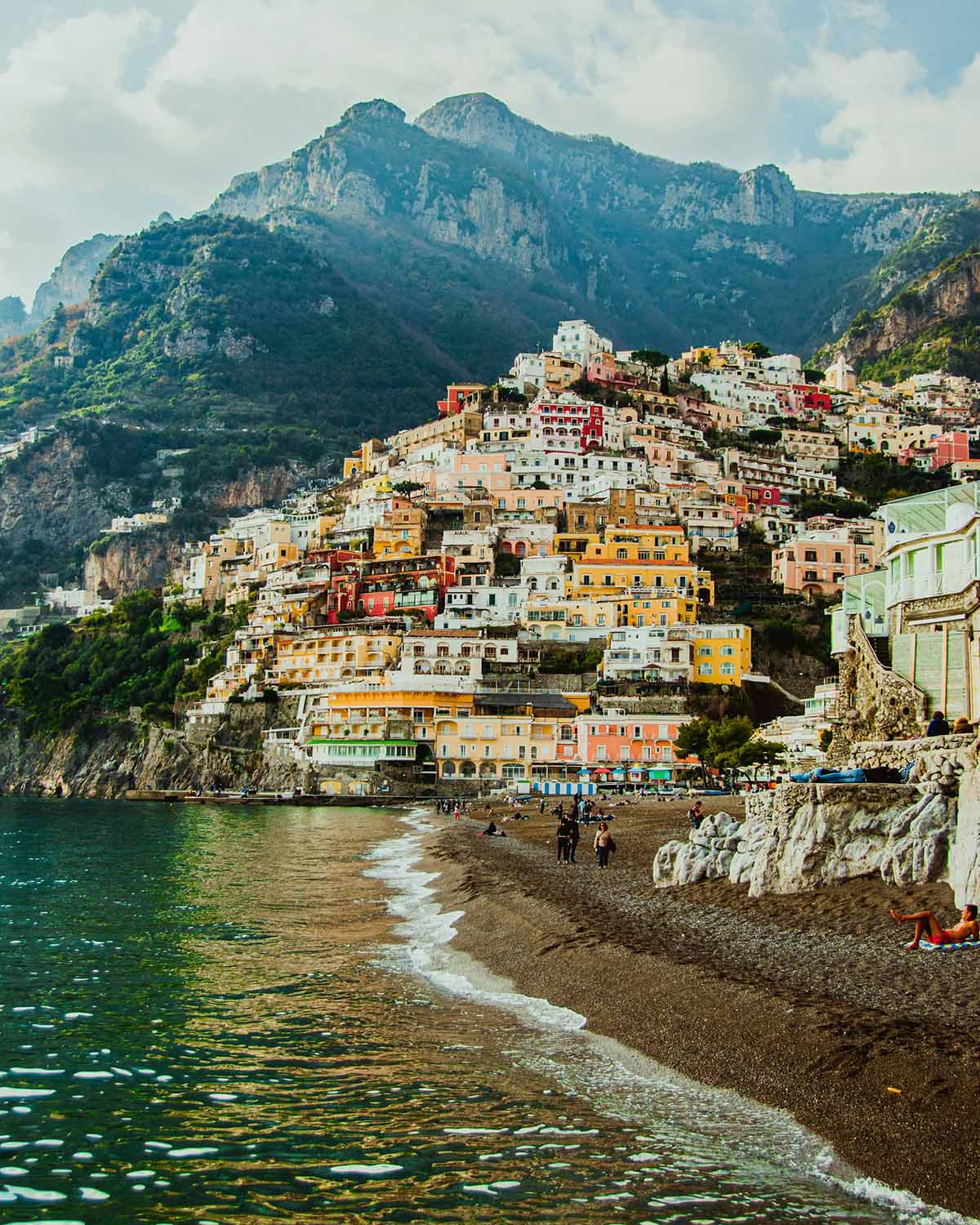
July and August are peak season. The coast is packed, hotel rates are at their highest (accommodation in Positano can average €500 per night), the roads are jammed, and parking lots fill up before 9 AM. The experience is still beautiful, but it requires patience and a generous budget.
May and September are the sweet spots. Temperatures sit between 20–27°C, the sea is warm enough for swimming, and the towns feel like places where people actually live rather than film sets. September in particular has something July doesn’t: local harvest festivals, olive picking events, and a version of the coast that belongs slightly more to its residents.
April and October work well for hikers and anyone who doesn’t mind skipping beach days. The coastal paths — including the famous Path of the Gods — are at their best in spring when wildflowers are out. October brings softer light and smaller crowds, though some smaller restaurants start closing toward the end of the month.
Winter (November to March) is quiet to the point of ghostly. Many hotels and restaurants shut down entirely, ferry services are reduced or suspended, and the weather can be rainy. That said, if you want to see Positano without three tour buses parked below it, January might be your chance.
Bottom line: Go in May or September if you can. If you’re going in summer, book accommodation and ferry tickets at least two months ahead.
There’s no direct train to the Amalfi Coast — the terrain makes that physically impossible. But getting from Naples to Amalfi is still very manageable, especially if you plan your route in advance.
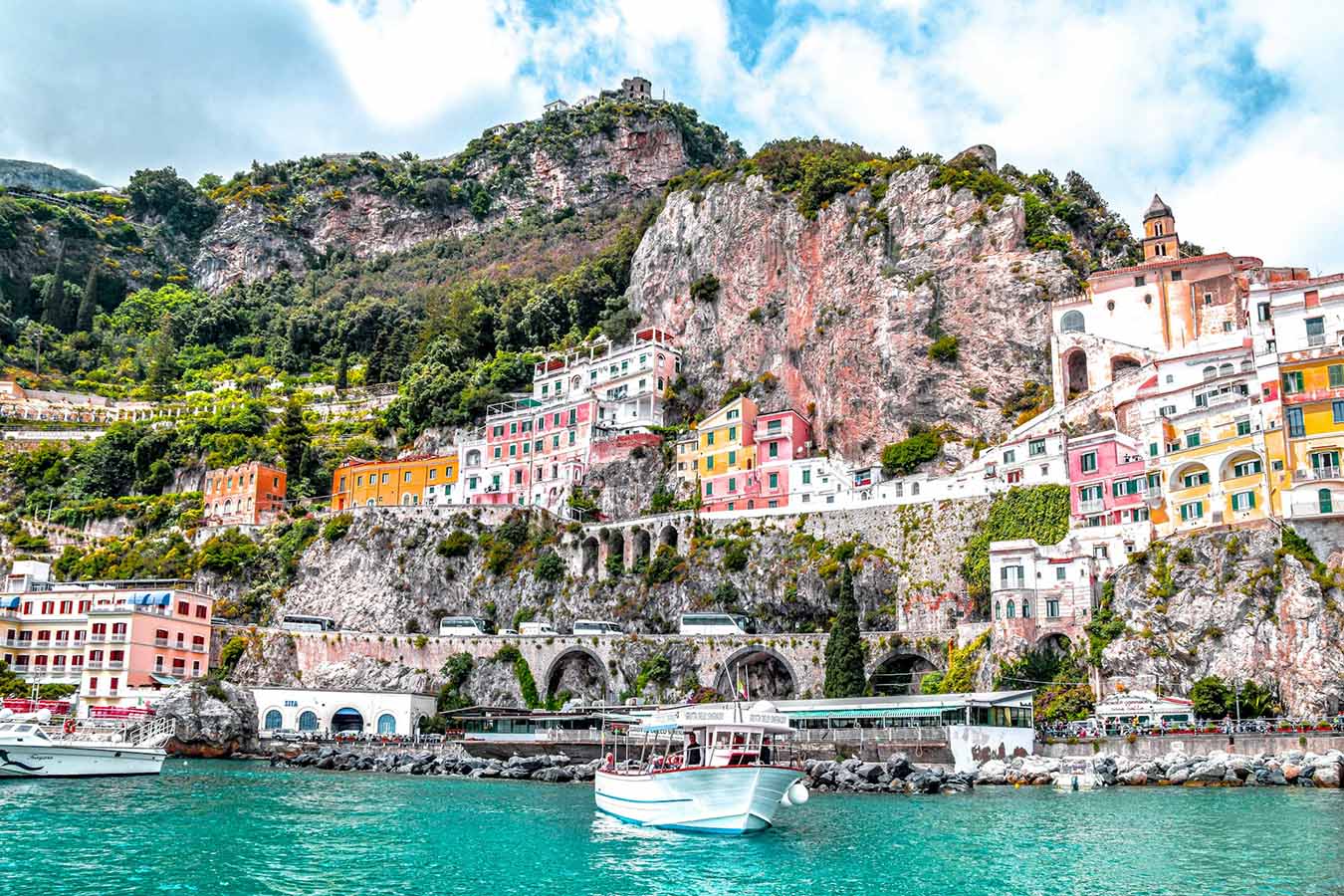
The most enjoyable way. From Naples’ Molo Beverello harbor, Alilauro runs direct ferries to Positano and Amalfi from approximately mid-May to mid-September. Ferries run once or twice a day (check the schedule before you go — it varies by season). The trip takes around 1.5 to 2 hours and costs roughly €25–35 one way. You arrive directly at the port, skip the coastal road traffic entirely, and the views from the water are genuinely different from anything you’ll see on land.
One practical note: if there’s rain or strong wind, services can be cancelled with short notice. Have a backup plan, particularly in spring and autumn.
Take the Circumvesuviana train from Naples Piazza Garibaldi station to Sorrento (about 1 hour, €4.90). From Sorrento, board a SITA bus bound for Amalfi (€2–4, tickets available at tabacchi shops or sometimes on the bus itself). The full journey takes around 2.5–3 hours and costs under €10 total. It’s economical, but it’s not comfortable if you have luggage, and the bus in high season is legitimately crowded.
If you’re arriving at Naples airport and want door-to-door comfort, private transfers are available from around €80–120 for the car. The driver handles the road; you handle the scenery. It’s worth it for families with children or anyone arriving late at night when buses don’t run.
The AliBus from Naples Airport to Sorrento costs around €10 and takes about 75 minutes. From Sorrento, you continue by SITA bus. Another option: a direct bus from Naples airport to Salerno (about €5.10, 90 minutes), from where you can catch a local ferry along the coast.
The SITA bus is the backbone of public transport on the coast. It runs regularly between Sorrento, Positano, Amalfi, Ravello, Praiano, and Maiori. Tickets cost €1.30–2.50 and can be purchased at tabacchi shops — do not try to pay the driver in high season; it causes delays and not all drivers accept it. The buses are old, narrow, and air-conditioning is not guaranteed. They’re also genuinely useful.
The ferry network run by Travelmar connects Amalfi, Positano, Cetara, Maiori, Minori, Salerno, and other stops. In summer, ferries run roughly hourly between major towns. A one-way ticket between Amalfi and Positano runs around €7–9. Traveling by sea between villages is slower on paper but often faster in reality once you account for road traffic.
Scooters are a popular alternative that the guidebooks tend to underrate. They’re easier to park, cheaper (about €2/hour vs €5–10/hour for a car), and genuinely fun on the coastal road. Several rental shops operate in Positano, Amalfi, and Sorrento. You’ll need a valid driving licence and some experience — the SS163 is not the place to learn.
Renting a car gives you complete freedom over your itinerary, which is worth something. If you want to stop at the Fiordo di Furore gorge at 7 AM before anyone else arrives, a car makes that possible. If you want to drive up to Ravello and spend the afternoon, you won’t have to check a bus schedule.
The downsides are significant, though. The SS163 is one of the narrower major roads in Europe — single-lane in several sections, with tour buses coming the other way. Drivers who’ve done it describe it as exhilarating and stressful in equal measure. If you’re not comfortable with tight mountain roads, genuinely consider skipping it.
If you do rent a car:
Rent the smallest car available. A compact is manageable; anything with a wide body becomes a problem at the hairpin turns. Start early in the morning, before 8 AM in summer, to beat traffic. Book the car from Naples or Salerno rather than from a town on the coast itself — agencies in the villages are limited and more expensive. Expect to pay €40–80 per day for a small car, plus fuel, plus parking.
Do not rent a car expecting to use it to get between towns during the day in July or August. The road is genuinely gridlocked between 10 AM and 6 PM. You’ll sit in traffic watching people on the ferries sail past.
This section exists because parking is a frequent source of misery for first-time visitors, and it doesn’t have to be.
In Positano: Street parking in the town center is essentially impossible unless you arrive before 8 AM. The main options are Parcheggio Di Gennaro (Viale Pasitea 1) and Parcheggio Mandara (Piazza dei Mulini), both centrally located and charging around €8–10 per hour. Daily rates at garages run €25–40. The only free parking is in the hillside hamlets of Nocelle and Montepertuso, from where a local bus runs down to the center.
In Amalfi: The Luna Rossa parking garage is cut directly into the cliffside between Amalfi and Atrani, with a tunnel that connects the two towns on foot. It charges €5/hour during the day (8–19h) and €4/hour at night. In August, it’s full by 8:30 AM. Piazza Flavio Gioia inside the port area also offers parking at €3/hour.
In Ravello: Parking under Piazza Duomo costs €2.50/hour, payable on exit. You can also buy a daily ticket for €15 at hotels along the main road.
General rules: Blue painted lines = paid parking. White lines = free, but almost always reserved for residents. Yellow lines = do not park there under any circumstances. The local police are efficient and fines start at €150. Towing is common.
If you’re visiting for the day rather than staying, parking in Salerno or Vietri sul Mare (both cheaper and easier) and taking the ferry or bus from there is a genuinely good strategy that many experienced visitors use.
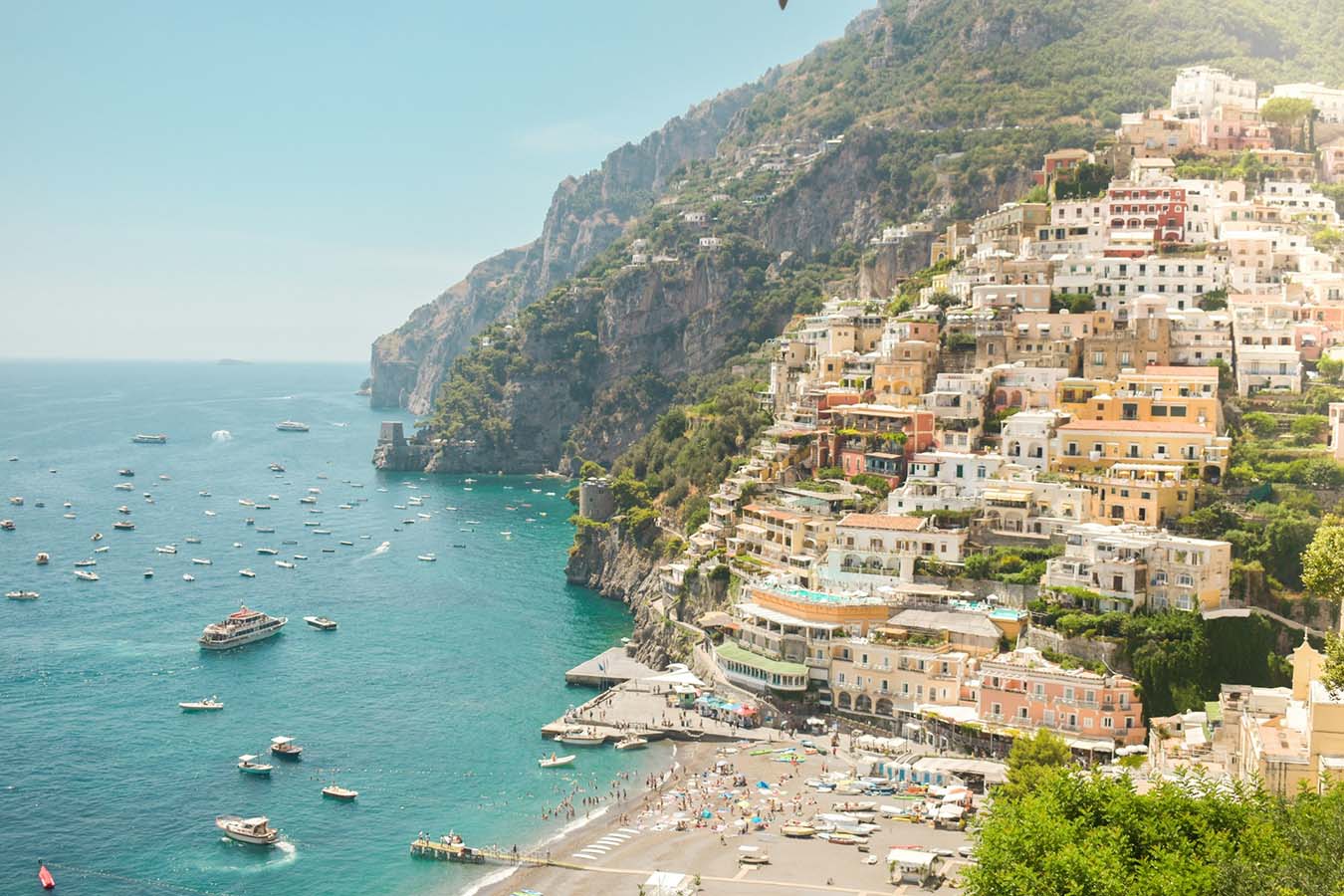
Positano is the most photographed town on the Amalfi Coast, and the most expensive. The pastel houses stacked up the cliff, the dome of the Santa Maria Assunta church, the pebbled Spiaggia Grande below — it’s as iconic as advertised. It’s also extremely busy and, for overnight accommodation, very costly. That said, a few hours wandering the narrow streets without a car is one of the better experiences the coast offers. Positano sits in the Campania region, technically part of the Metropolitan City of Salerno.
Amalfi is the town the whole coastline is named after, and probably the most practical base if you want easy access to everything. It has a proper town square, the Cathedral of Sant’Andrea (worth going inside for the bronze doors alone), good public transport connections, and hotels at a wider range of price points than Positano. The medieval republic of Amalfi once rivaled Venice as a maritime power — the Arsenal of the Amalfi Republic is the oldest naval building in the Western world still standing.
Ravello sits 350 meters above sea level, technically not on the water. The views from Villa Cimbrone and Villa Rufolo down to the coast are among the best panoramas anywhere in Italy. Ravello’s annual arts festival runs July through September with performances in an outdoor auditorium that looks directly over the sea. If you’ve done Positano and Amalfi, Ravello is the one most visitors wish they’d stayed longer in.
Praiano is quiet, less expensive than Positano, and a good base for hikers. It sits roughly halfway between Positano and Amalfi, making it convenient for exploring both directions. The beach at Marina di Praia is small and often less crowded than the main Positano beaches.
Atrani is the smallest village on the coast and easy to overlook since it’s immediately adjacent to Amalfi. Most people walk through it without realizing they’ve left one town and entered another. It has a small square directly on the beach, a handful of local restaurants, and almost no tourist infrastructure — which is either a drawback or the whole point, depending on who you are.
Minori and Maiori are genuinely underrated. Maiori has the longest sandy beach on the entire coast and far more reasonable prices than Positano or Amalfi. Minori is known for its fresh pasta. Neither is trying to impress you with a view from a cliff, and that’s exactly why they’re worth an afternoon.
Vietri sul Mare sits at the eastern end of the coast and is famous for its ceramic production. The whole town is decorated in handmade tiles and wall pieces. If you’re traveling by train from Naples (the metropolitan line to Vietri costs €5.10 from Piazza Garibaldi), this is where you arrive.
Cathedral of Sant’Andrea, Amalfi: The facade alone is worth a few minutes of standing and looking. The 9th-century bronze doors were cast in Constantinople. The crypt contains the relics of Saint Andrew. Dress code applies — shoulders and knees covered.
Villa Cimbrone and Villa Rufolo, Ravello: Both offer gardens and views. Villa Cimbrone’s Terrace of Infinity looks like something invented for a film. It’s real, and it’s as good as it looks. Entry costs around €7–8 for each.
Grotta dello Smeraldo (Emerald Grotto): Accessible by boat from Amalfi or by elevator from the SS163 road above. The cave gets its name from the green light that filters through the water. Entry is around €5. It’s genuinely beautiful but relatively small — 30 minutes is enough.
Path of the Gods (Sentiero degli Dei): This 7.5 km hiking trail runs along the ridge above the coast between Agerola and Nocelle (above Positano). The views are, without question, the best on the entire coast. It takes 3–4 hours one way; most people arrange transport from one end. Start early in summer — it’s exposed to the sun and there’s no shade on the ridge sections.
Furore Fjord (Fiordo di Furore): A narrow inlet carved into the cliff, painted colorful and featured on postcards. It’s small and brief, but the surrounding scenery makes the stop worthwhile. Park at Castellana Parking in Praiano (about 2 km away) if you’re driving.
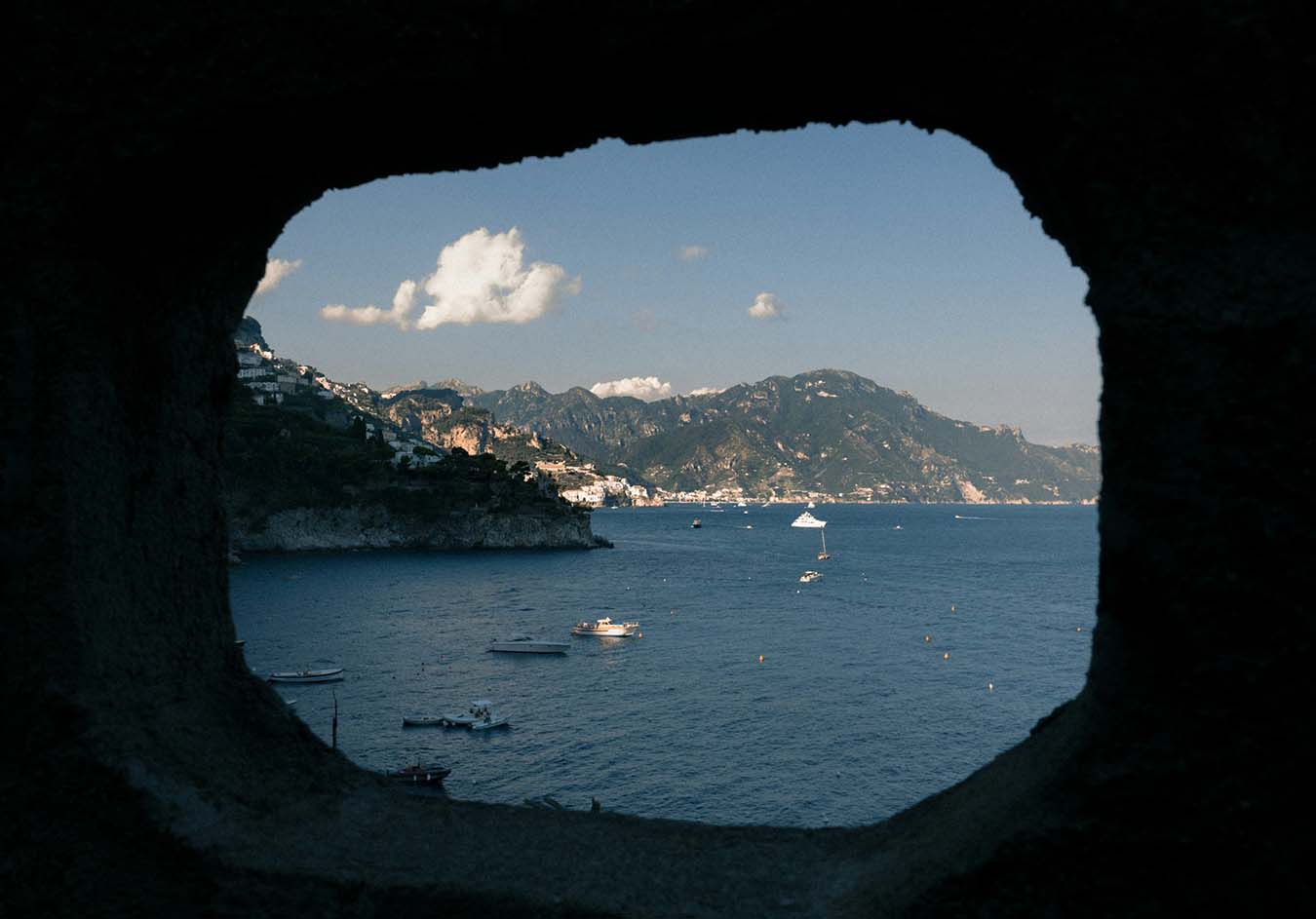
Most beaches on the Amalfi Coast are pebbled rather than sandy. Expect to pay for a sunbed and umbrella at the popular spots — usually €15–25 per sunbed per day. Some beaches are purely private (lido beaches operated by hotels); others have a public section you can access for free if you’re willing to bring your own towel and find a spot.
Spiaggia Grande, Positano: The main beach. Beautiful setting, obvious reasons. Gets very crowded by midmorning in summer. The free section is in the middle; private sunbeds flank both sides.
Fornillo Beach, Positano: A 10-minute walk west of Spiaggia Grande along a cliffside path. Smaller, quieter, slightly more relaxed atmosphere. Worth the walk.
Marina di Praia, Praiano: A small beach at the bottom of a steep path, surrounded by cliffs. One of the quieter options between Positano and Amalfi. A couple of restaurants right on the water.
Atrani Beach: Right in front of Atrani town, directly connected to Amalfi. Mostly pebbled, but less crowded than Positano, and the location between the two towns is genuinely convenient.
Maiori Beach: The longest sand beach on the coast, around 1 km. Less glamorous setting than Positano, but more accessible, cheaper, and far less crowded in peak season.
Beaches by Boat: Some of the best spots on the coast — hidden coves, sea caves, spots below the cliffs that have no road access — are only reachable by water. If you’re staying more than two days, renting a small boat for half a day (around €80–150, depending on size and season) and exploring the less-accessible stretches of coastline is one of the best things you can do.
Most tours depart from Naples. Here’s how the main options compare:
Full-day group bus tour (Positano + Amalfi + Ravello from Naples): Around €80–120 per adult. Duration: 8–9 hours. Includes a guide, transport, and usually some free time in each town. Lunch is sometimes included. These tours exist on GetYourGuide, Viator, and local operators. Good value if you’re on a budget and only have one day.
Full-day tour with boat ride included: €110–150. The boat section is usually between Amalfi and Positano. Worth it if you want to see both perspectives (road and sea) in one day.
Combined Amalfi Coast + Pompeii: €110–140. A full day, two UNESCO sites, usually 9–10 hours. Pompeii entry (€22) is typically paid separately on the day.
Private transfer/driver for the day: €200–350 for 2–4 people sharing. You set the itinerary; the driver handles everything. The cost per person starts to look reasonable if you’re a couple or small group.
Boat tour from Amalfi or Positano: €40–70 per person for a shared boat trip along the coast with swimming stops. Private boat hire (a traditional wooden gozzo) runs €150–300 for half a day, capacity 6–8 people. The shared gozzo tours with snorkeling equipment and limoncello onboard are genuinely enjoyable.
Practical advice on booking: Book group tours at least 2–3 weeks ahead in July and August. GetYourGuide and Viator both offer free cancellation up to 24 hours before, which is worth noting if your plans are flexible. World Tours Italy (worldtoursitaly.com) is a well-reviewed local operator running group departures from Naples.
The Amalfi Coast has a practical dress code that nobody officially enforces, but the terrain enforces for you.
Comfortable walking shoes are non-negotiable. The towns are built on steep hills and connected by stone staircases. Flip-flops work on the beach; they’ll make you miserable on the Path of the Gods or even on the stairs between Atrani and Amalfi. A pair of proper trainers or lightweight hiking shoes covers everything.
For churches — Amalfi Cathedral, Santa Maria Assunta in Positano — shoulders and knees need to be covered. Keep a light scarf or a t-shirt in your bag if you’re planning to visit in beach clothes. It’s not a big deal to prepare for and an annoying one to be turned away for.
Sun protection matters more than most visitors expect. The coastal road has almost no shade, and if you’re on a boat or at the beach, reflected light from the water intensifies exposure. Bring SPF and reapply it.
A light waterproof layer is useful in spring and autumn when afternoon rain is possible. In July and August, you probably won’t need it.
For evenings: the coast skews toward the dressed-up end of casual. Restaurants don’t enforce dress codes, but the atmosphere in Positano and Ravello in particular leans toward summer dresses and linen shirts rather than beach shorts. You’ll feel more comfortable having at least one outfit that isn’t beach gear.
Buy bus tickets before you board. SITA tickets are sold at tabacchi shops in every town. Buying on the bus (if possible) is more expensive and slower. Keep a couple of tickets in your pocket so you’re ready.
The ferry from Salerno is one of the best-value options on the coast. A ticket from Salerno to Amalfi costs around €7 and takes about 40 minutes. If you’re based inland or arriving from the south, Salerno is a genuinely underrated base — it’s a proper city with affordable hotels, a 10-minute walk from the ferry terminal to the center.
Ravello in the evening is different from Ravello during the day. The daytrippers are gone, the light is better, and the views from the gardens are quieter. If you can stay for dinner or even overnight, it’s worth the extra cost.
Avoid the central town restaurants in Positano at peak lunchtime. Walk uphill or further inland and the prices drop noticeably. The same plate of pasta can cost €18 at a restaurant on the beach and €10 four streets back.
For the Path of the Gods, go east to west. Starting from Agerola and ending at Nocelle means you walk toward Positano and the sea is in front of you the whole way. The light in the morning hits better from this direction too.
Porters in Positano charge €15 per piece of luggage to carry bags up the stairs. Factor this in if you’re staying at a hotel that isn’t accessible by road — which a significant number of them aren’t.
Carry cash. Plenty of small bars, boat operators, and beach attendants on the Amalfi Coast prefer or require it. A few hundred euros in small bills at the start of your trip will save repeated ATM trips.
The community feedback from travel platforms and forums is fairly consistent on a few points:
“Parking anywhere in the entirety of the coast was horrible. Luckily the coast has a good system of bus transportation. We came with a car but found ourselves using the bus to escape city parking and unpleasant, dangerous windy roads.” — Google Reviews via Wanderlog
“Beautiful coastline. Bit busy in July when we went. Would like to visit when it’s quieter and less tourists. Stunning sunsets and scenery.” — Google reviewer
“Skip the car. Where to stay — Positano, Ravello and Amalfi are all great choices. We loved Positano.” — Fodor’s Travel Forum
“I’ve always had a car when on the [Amalfi Coast], even though I know all the arguments against — parking, cost, traffic. I’ve found it much more convenient and easier through the day when sightseeing. The congestion on the coast road is the same for any form of transport, but the car lets us do our own thing.” — Fodor’s Travel Forum (counterpoint, included for fairness)
“People arrive on the coast dreaming of crystalline beaches and colorful postcard villages. Instead, they’re met with endless traffic, accommodation in Positano that costs on average €500 a day, porters who charge €15 to climb 100 stairs with your luggage, and meals that can cost €150 per person.” — Francesca Coppola, University of Venice researcher on overtourism, quoted in Lonely Planet
“Path of the Gods was a must see and experience. Would definitely recommend visiting.” — Wanderlog reviewer
“One of the most beautiful sceneries I’ve ever been able to view. Take a private boat tour — it’s totally worth it.” — Google reviewer
“We based ourselves in Salerno and would highly recommend it. It’s not officially part of the Amalfi Coast, which is one of the reasons we chose it. It’s extremely close, very chill, and much more affordable than anywhere on the coast.” — WhereonPlanetEarth travel blog
The honesty in those last few reviews is worth sitting with. The Amalfi Coast has gotten expensive in a way that catches some visitors off guard. It’s not a budget destination — but knowing that going in lets you plan for it.
The Amalfi coastline is one of those places where the reputation is actually warranted. It’s genuinely dramatic, genuinely beautiful, and genuinely Italian in a way that larger cities sometimes struggle to be. The lemon groves hanging above the sea, the ceramic-decorated staircases, the smell of the coast road at dawn — these things are real.
It’s also crowded, expensive, logistically demanding, and built on terrain that will tire your legs out by lunchtime. Going in July without advance bookings or a clear transport plan is a reliable way to spend your holiday sitting in traffic and queuing for restaurants.
The visitors who come back from the Amalfi Coast most satisfied tend to share a few things: they went in May or September, they took ferries instead of buses whenever possible, they stayed somewhere outside Positano’s epicenter, and they budgeted honestly for what the coast actually costs. They also did the Path of the Gods, because almost everyone who does it says it was the highlight of the whole trip.
Loved this guide? Pin it, share it, or bookmark it for your Italy planning.