Get Weekly Travel Inspiration Straight to Your Inbox




100+ subscribers
Join 100+ subscribers who receive our curated destination picks, flight deal alerts, and exclusive travel guides — every Thursday.

Everything you actually need to know — the good, the maddening, and the truly unmissable.
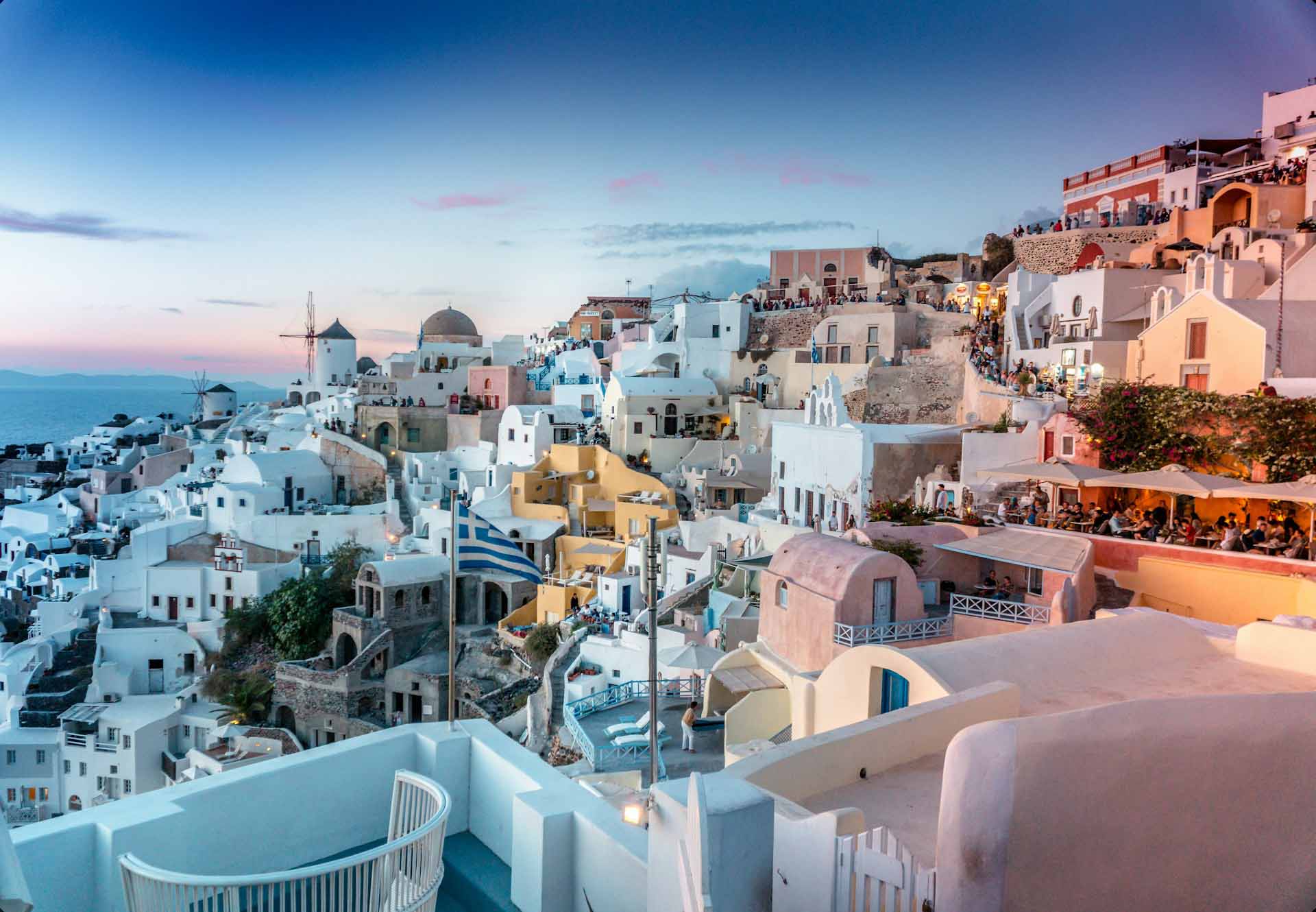
Let’s be upfront: Santorini is crowded. At peak summer, some 3.4 million tourists pass through an island that’s roughly 76 square kilometers. The mayor has publicly pushed for a cap on cruise passengers — at one point up to 17,000 a day — because the infrastructure simply wasn’t built for this. Locals talk about it. Reddit talks about it. You’ll feel it the moment you’re shoulder-to-shoulder at Oia’s castle ruins waiting for a sunset.
And yet. People keep coming back. The volcanic landscape really is unlike anything else in Greece. The caldera views at dusk — the sky going pink and orange over the water while white houses cascade down the cliff — are not Instagram fiction. They’re real, and they are genuinely something.
If you go in July or August, you’re choosing the zoo. If you go in May, June, September, or October, you get most of the beauty and a fraction of the chaos. That single scheduling decision changes the entire experience.
Santorini (also called Thira) is part of the Cyclades archipelago in the Southern Aegean Sea. The island group also includes the smaller islets of Thirassia, Aspronissi, Palea Kameni, and Nea Kameni. The whole place sits atop the remnants of one of the largest volcanic eruptions in recorded history, and that geology explains everything — the black and red sand beaches, the dramatic cliff faces, the soil that produces some of the best white wine in Greece.
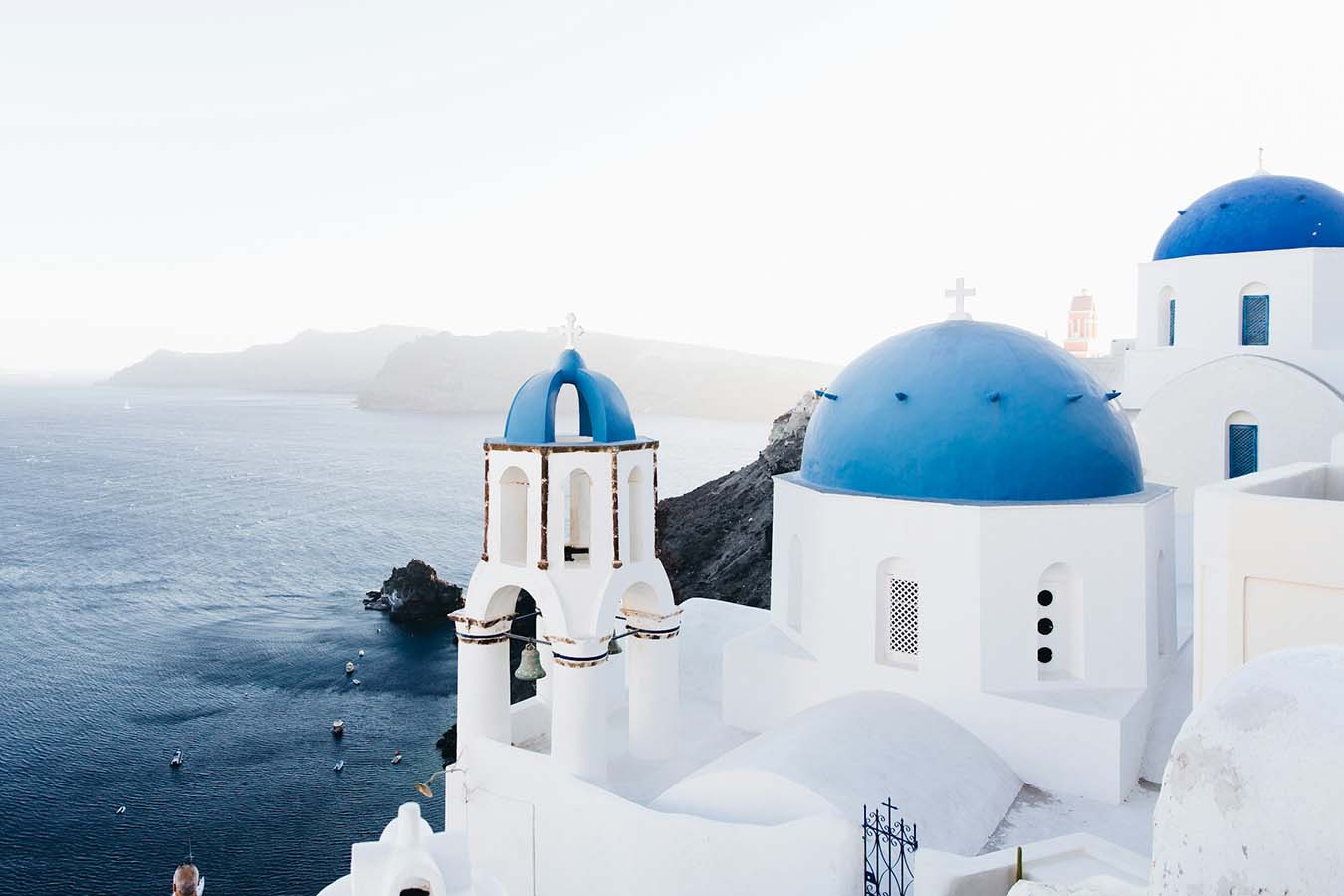
June and September are the sweet spot. That’s not just a travel cliché — it’s the honest consensus from the travel community. The weather is warm (22–27°C), the sea is swimmable, most businesses are open, and the crowds are manageable. You’ll still queue for the Oia sunset, but you won’t be queuing in a wall of people.
July and August bring temperatures up to 30°C, full ferry schedules, the Santorini Jazz Festival in July, and an island operating at absolute maximum capacity. Everything is open. Everything is expensive. Buses arrive full. If peak-season energy suits you, go for it — just book everything weeks (ideally months) in advance.
April and May offer a quieter island, mild weather (15–23°C), blooming wildflowers, and the extraordinary experience of Greek Orthodox Easter, which the island celebrates with processions and candlelit ceremonies that tourists rarely see.
October and November are for people who don’t mind that some spots will be closed. Fewer tourists, lower prices, cooler temperatures, and the occasional dramatic sea storm rolling in. If that appeals to you, it’s underrated.
January through March: most of the island shuts down. Some die-hards love the solitude. For most travelers, it’s probably not worth the trip.
Flying is the fastest option. Santorini Airport (IATA: JTR) receives direct flights from Athens (around 45–55 minutes) and direct connections from major European cities during the summer season. Aegean Airlines and Sky Express operate the Athens route regularly; the Athens–Santorini flight costs roughly €35–100 depending on how far in advance you book.
From the airport, a taxi to Fira runs about €25, and buses (operated by KTEL) cost €1.60 and run regularly into town.
The ferry is slower but genuinely a better experience if you’re island-hopping or simply want to arrive by sea. Two main ports in Athens serve Santorini:
Piraeus Port (Athens city) is the main hub and offers more daily sailings. Rafina Port is closer to Athens International Airport — a KTEL bus from the airport (look for the orange-and-white buses across from the terminal exits) takes you there for a few euros.
Two types of ferry operate the route:
The ferry arrives at Athinios Port on Santorini’s east coast. From there, buses run to Fira (the island’s main hub), or you can grab a taxi for around €12–15.
The KTEL bus network is the cheapest way to get around Santorini, with tickets costing between €2.20 and €2.80 depending on the route. The critical thing to understand is that every single route starts and ends at the main bus station in Fira. If you want to get from Oia to Perissa Beach, for example, you take two buses with a change in Fira — not one direct connection.
In high season, buses to popular destinations like Oia, Kamari, and Akrotiri run roughly every 15–30 minutes. The downside: summer buses arrive crowded. If a packed bus pulls in and you can’t board, you wait for the next one. Always build in buffer time, especially if you’re catching a ferry.
Taxis are available but limited in number and can be hard to find during peak hours. Fares are set (Fira to Oia is roughly €20–25, airport to Fira is about €25), and prices are fixed by a government tariff — no meters in the traditional sense. The taxi rank in Fira’s main square is your best bet.
Private transfers are popular for airport or port pickups, and some hotels will organize these for you. If you’re arriving late or have heavy luggage, it’s worth it.
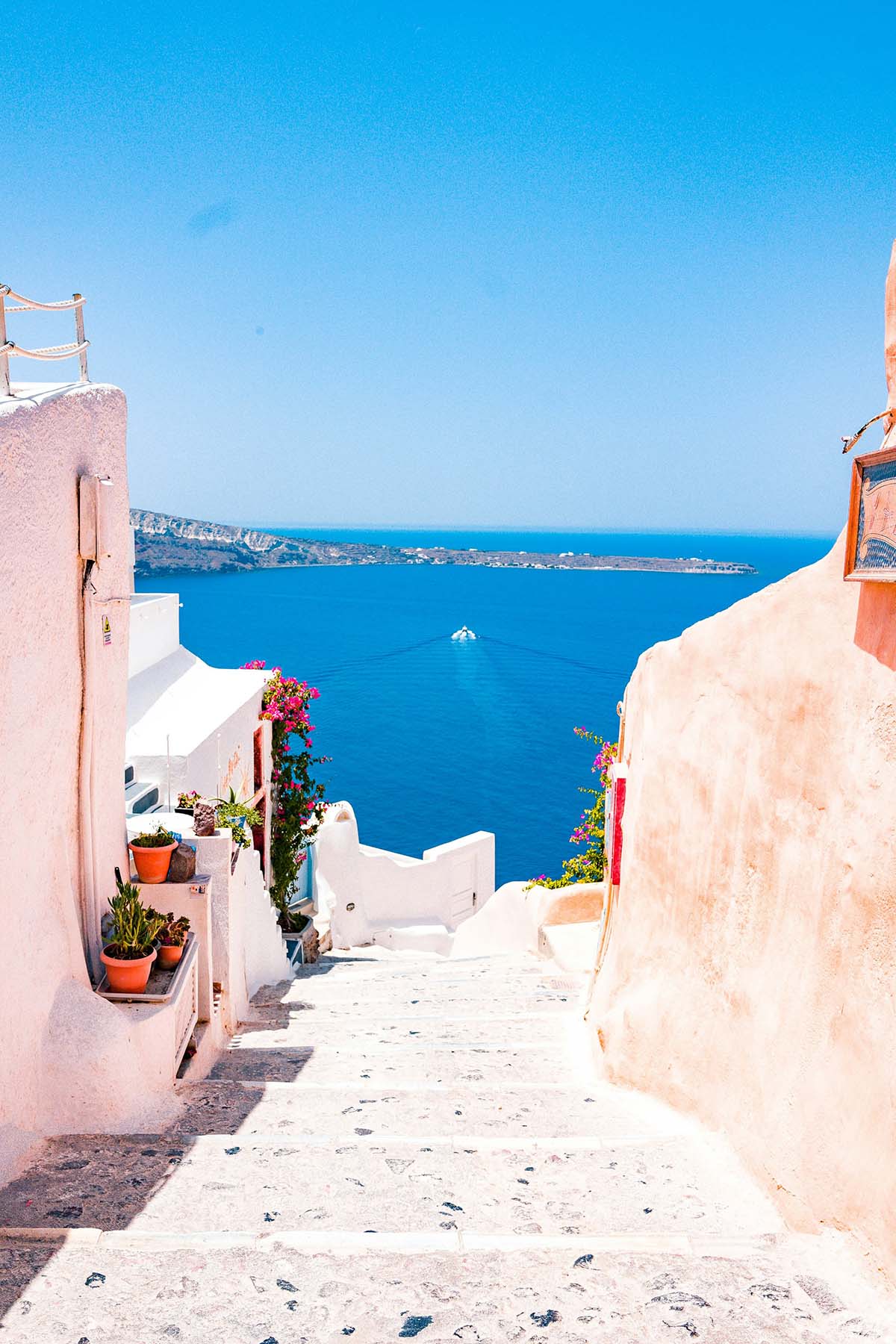
Walking between villages is possible in parts — the Caldera trail between Fira and Oia (about 10km) is a famous walk and takes 3–4 hours. It’s genuinely beautiful and much less crowded than the main spots, but start early in summer before the heat kicks in.
Most visitors who want real freedom rent something. The island takes under an hour to drive end-to-end, so a rental car opens up the whole thing in a way public buses simply can’t.
Budget: Small economy cars (Hyundai i10, Mitsubishi Mirage, Fiat Panda) start from around €30–45/day in shoulder season and can climb to €60–100/day in July and August. The cheapest month to rent is May (average around €20/day); August is the most expensive at €60–66/day on average.
Book 2 weeks in advance to get the best price. Platforms like DiscoverCars.com, KAYAK, and Expedia let you compare local agencies alongside international names like Hertz. Autounion Car Rental is the most widely distributed local agency on the island with multiple pickup locations.
Local agencies at the airport include: Hertz, Thrifty, Surprice, Green Motion, Autounion, and Odysseys Car Rentals. Pickup is available at the airport (JTR) or at major village locations.
A valid EU driver’s license is accepted. Non-EU visitors technically need an international driving permit — agencies may rent to you without one, but you’re driving at your own risk if an incident occurs.
Roads are narrow but manageable. Traffic around Fira and Oia gets congested in peak season, but outside those areas, driving is easy and the views are worth it.
ATVs (quad bikes) are extremely popular, especially among younger travelers. Expect to pay around €40–55/day for a standard ATV. You’ll spot rental shops along the main streets of every village — they’re hard to miss (the row of parked quads out front gives them away).
Companies like Louis Rent a Moto and Rent Me Love Me are frequently mentioned in reviews. Prices are competitive, and delivery to your hotel is often available. One honest note from traveler reviews: quality varies. Check the condition of the vehicle before you drive off. Some visitors have received older, worn-out machines while being charged for a newer model. Inspect it, photograph it, and ask about the brakes.
For scooters, a motorcycle license is typically required.
Oia has a large public parking area at the village entrance — it’s free, but gets completely full during sunset hours. Arrive by 3pm if you’re driving and plan to watch the sunset on foot.
In Fira, street parking along the main road is limited. The easiest option is the designated parking areas just outside the main pedestrian zone — again, free, first-come first-served.
Akrotiri, Perissa, and Kamari have easier parking near their beaches and archaeological sites. Red Beach (near Akrotiri) has a small paid parking area close to the trailhead.
General rule: if you’re renting a car, park in the designated areas outside village centers and walk in. Trying to navigate the narrow lanes of Oia or the caldera edge of Fira by car is unnecessary stress.
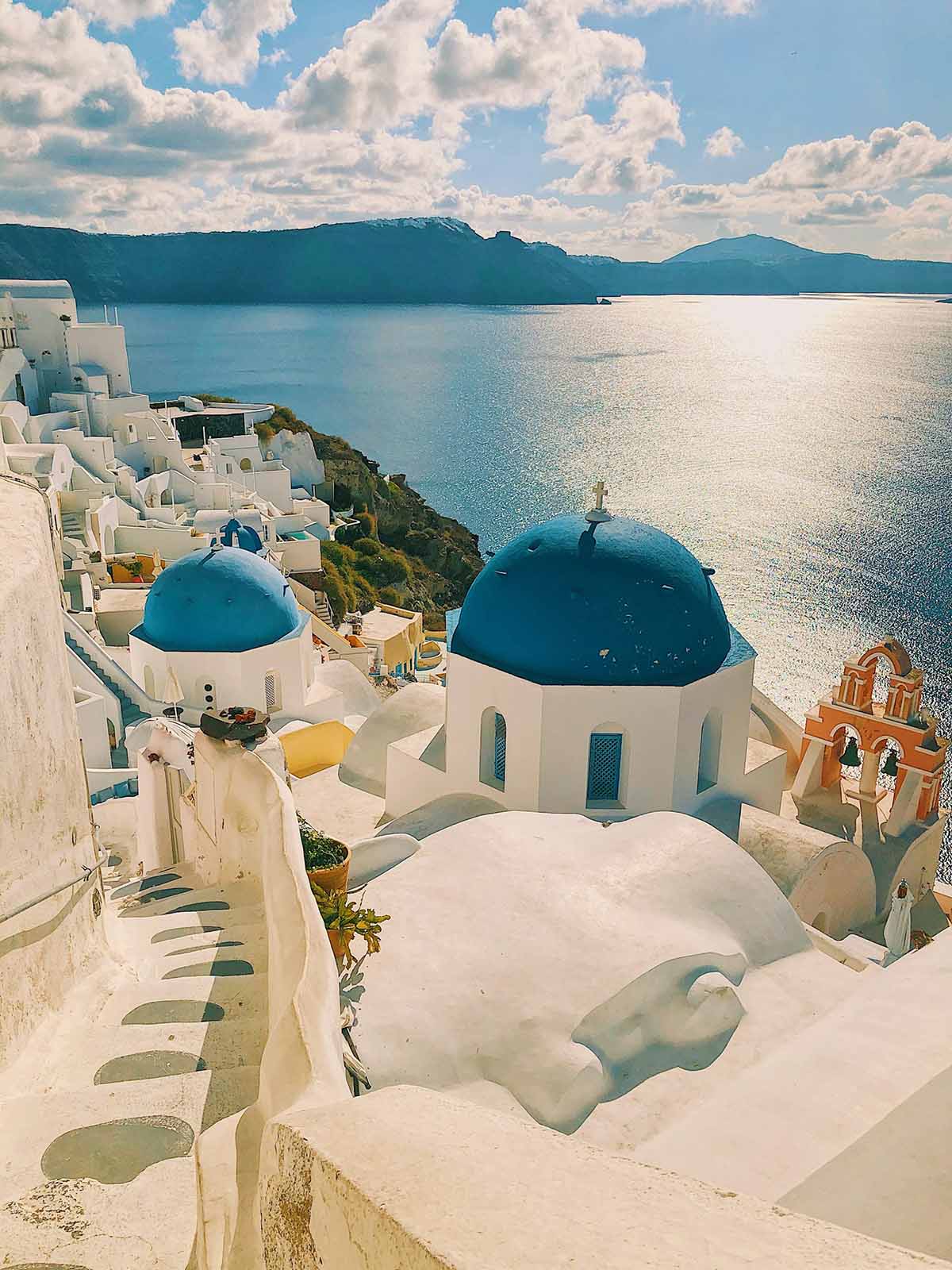
Oia sits at the northern tip of the island, draped along the caldera cliff. The white-washed architecture, the blue-domed churches, the windmills, the layered views out to the Aegean — it’s every Santorini postcard, and it looks just like that in real life.
The Blue Domed Churches (technically Saint Anastasi and Saint Spyridon, built in the mid-1800s) are about a 5-minute walk from the village center toward the sea. They’re two churches sharing one famous silhouette. They’re small, often surrounded by people with cameras, and genuinely pretty.
The Venetian Castle Ruins (Kasteli) at the western edge of the village are the most popular sunset point. Arrive at least 90 minutes before sunset if you want a decent vantage. The crowds at golden hour are real — one TripAdvisor reviewer from September 2025 put it plainly: “If you can find a meaningful place from the influx of tourists who don’t know what personal space is, you can enjoy it.”
Ammoudi Bay, reached by descending around 200 steps from Oia’s village (or driving around), is the small fishing harbor below. It has a handful of seafood tavernas right on the water. Many visitors rate it as one of the most enjoyable meals on the island — fresh catch, tables practically on the water, reasonable prices by Santorini standards.
Oia Maritime Museum inside a captain’s manor home is a low-key highlight that most visitors skip entirely. If you’re in Oia for more than an afternoon, it’s worth an hour.
Oia’s main lane has plenty of shops (ice cream, jewelry, ceramics, art), and some excellent coffee spots. Luno Café (formerly Passagio) is consistently mentioned as a quieter alternative to the main strip for breakfast and coffee. The village itself doesn’t have much nightlife — after sunset, the crowds thin and it becomes a different, calmer place.
Fira (also spelled Thira) is the island’s capital and main transport hub. It sits right on the caldera edge and has the best connected infrastructure on the island — the main KTEL bus station is here, taxis congregate here, and most car rental agencies have a branch here.
Fira is busier and more commercial than Oia, but it’s also where you’ll find the Archaeological Museum of Thera, which houses finds from the Akrotiri excavations and gives the island’s history real context. Entry is a few euros and rarely crowded.
The Museum of Prehistoric Thira nearby specifically covers the Minoan city buried under volcanic ash — a civilization comparable in sophistication to Ancient Egypt. It’s small but genuinely impressive.
From Fira’s old port (Gialos), you can access the caldera boats for volcano tours. The port sits at the bottom of a steep cliff — you get there either by cable car (€10 each way) or by walking down 587 steps. Donkeys are also available for the ascent, though using them is increasingly controversial.
For sunset in Fira, the caldera-edge bars and restaurants like Enigma and PK Cocktail Bar offer views that rival Oia with a fraction of the crowd pressure. You’re looking at the caldera across open water rather than over the village, which is actually a different and equally compelling perspective.
Akrotiri Archaeological Site — A Bronze Age city buried by the same volcanic eruption that created the caldera. Well-preserved multi-story buildings, indoor plumbing, colorful frescoes. It’s been called the “Pompeii of the Aegean” and the comparison holds. Entry around €12. Cover it with shade, bring water, and budget 2 hours.
Pyrgos Village — Inland, quieter, less visited, with one of the island’s best viewpoints from the Venetian castle at its top. Excellent for wine: several of Santorini’s 21 wineries are clustered nearby.
Nea Kameni (Volcano Island) — The active volcano in the middle of the caldera. You can hike to the crater rim with a guide. Entrance fee: €5/person. Usually accessed by boat tour from Fira’s old port.
Akrotiri Lighthouse — At the island’s southern tip, the lighthouse is a quiet spot with sweeping caldera views. Less famous than Oia but genuinely peaceful, especially outside peak hours.
Santo Wines Winery — Santorini’s volcanic soil produces Assyrtiko grapes that make some of Greece’s best dry white wine. A tasting session here comes with caldera views. A small-group sunset wine tour costs around €209 (from GetYourGuide). Many local agencies offer winery tours at lower prices if you book directly.
One thing to get straight first: Santorini’s beaches are volcanic, not the classic white-sand Greek island type. If you’re dreaming of the sandy shores of Mykonos or Naxos, the beaches here will be different — mostly black, red, or dark pebble, born from ancient eruptions. They’re dramatic and photogenic. They’re also extremely hot underfoot in August — flip-flops mandatory.
Perissa and Perivolos — The twin black-sand beaches on the southeast coast. Perivolos is one of the longest on the island. Both have organized beach bars, sunbeds, umbrellas, and a tree-lined promenade. Closest Santorini gets to a typical resort beach experience. Family-friendly, easy to reach by bus from Fira.
Kamari — Similar vibe to Perissa but on the east coast with an airport view (some find this charming, some don’t). Black pebble beach, pedestrian promenade, good tavernas. Shallow entry, calm water, well-organized. One of the best beaches for families.
Red Beach (Kokkini Paralia) — Near Akrotiri in the south. Iron-rich red cliffs framing a strip of rusty sand and turquoise water. Small, partly pebbly, and accessed via a 10-minute walk or short boat ride from Akrotiri beach. No café or facilities at the beach itself — bring snacks and water. It gets crowded; go early morning for the best experience.
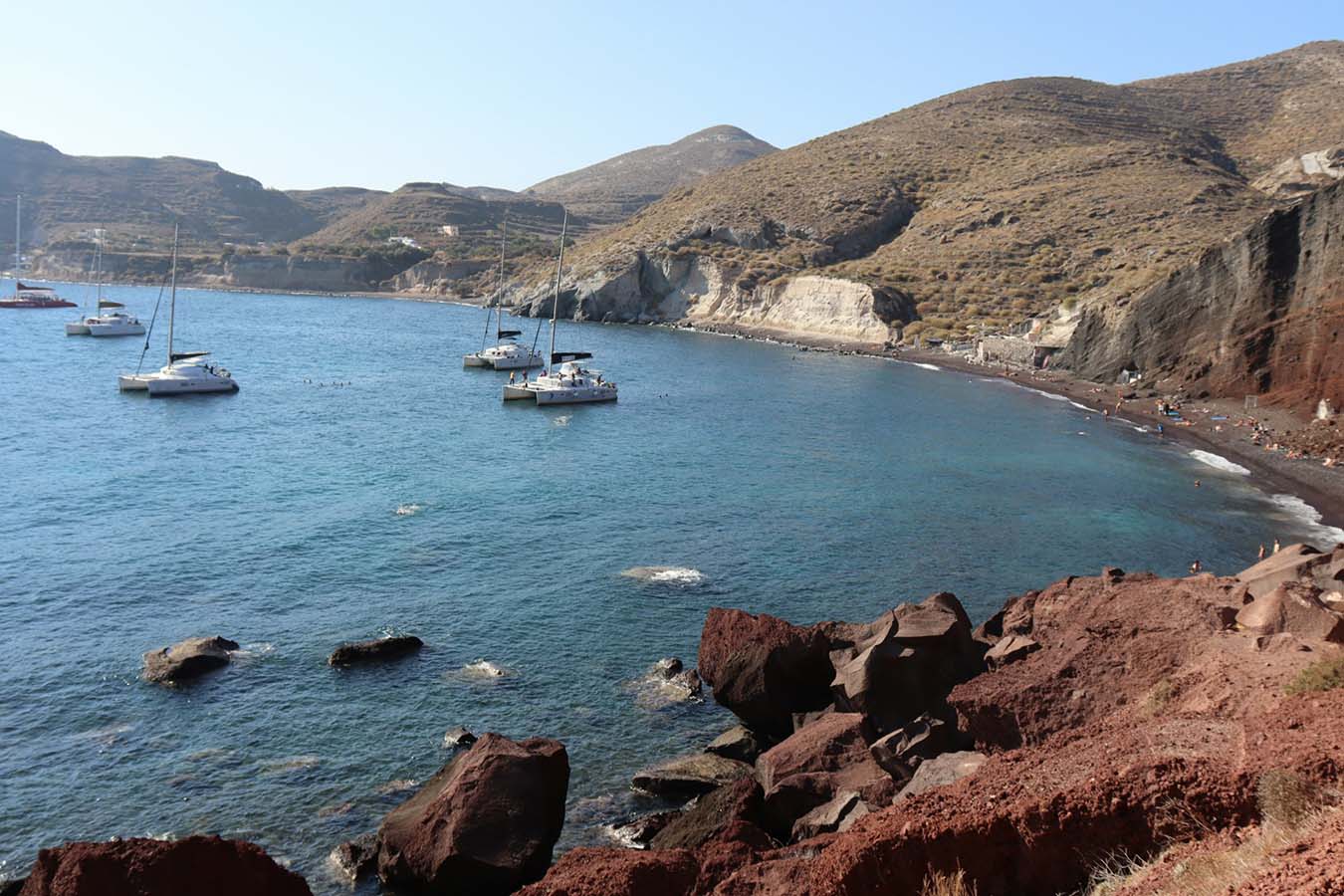
White Beach — Next to Red Beach, accessible by boat. Quieter, with eroded white-grey cliffs. A good add-on if you’re already at Red Beach.
Vlychada — Southeastern coast, near the marina. Lunar-like eroded white cliffs over black sand. One of the quieter and more photogenic spots, popular with locals avoiding the tourist areas.
Monolithos — Near the airport, with fine dark sand, gentle shallow water, play areas, and lifeguards. The best choice for small children on the island.
Cape Columbo — The most secluded beach, at the northeastern tip. No facilities, no crowds (relatively), and partially naturist. Worth the effort if you want to be left alone.
Armeni Beach — Reached by steep stairs from Oia, this small beach below the village gives a different view of the caldera cliffs. It’s tiny, but the setting is its own reward.
Caldera Volcano and Hot Springs Boat Tour — This is the most popular excursion on the island, and for good reason. You sail from Fira’s old port to Nea Kameni (the active volcano), hike to the crater with a guide, then swim in the geothermal hot springs (milky yellow sulfur water — wear an old dark swimsuit, it stains). The basic version runs about €42–59/person and lasts 3–6 hours. The full-day version includes Therasia Island and runs 6–8 hours from €59–111.
A note from a recent traveler: “Bring good walking shoes. The hike is more substantial than some guides let on. A hat is essential.”
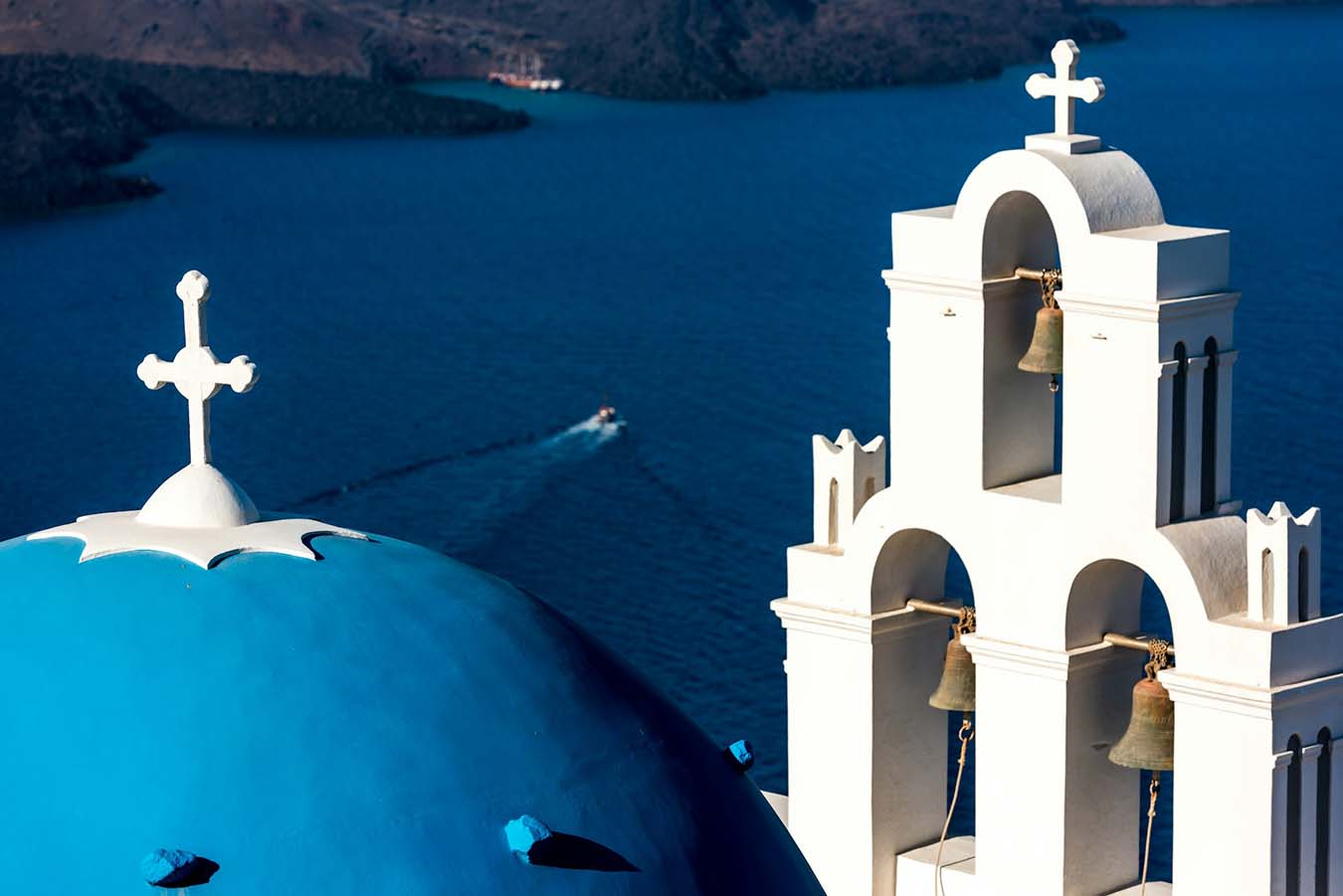
Sunset Sailing Catamaran Cruise — Probably the most romantic thing you can do on Santorini. A catamaran cruise in the late afternoon includes sailing the caldera, a stop for swimming, and watching the sunset from the water with Oia glowing gold above you. Prices start around €70/person for a basic shared cruise with a meal and drinks included; premium options with smaller groups and full BBQ go up to €163/person.
Platinum Catamaran with Open Bar — Consistently rated 4.8 on GetYourGuide, from around €142/person. Worth it for a special occasion.
Small-Group Sunset Wine Tour at Santo Winery — 4 to 4.5 hours, rated 4.9/5, from €209/person. Expensive but the wine and caldera views combination is hard to beat. Best for serious wine enthusiasts or a memorable anniversary dinner.
Caldera Bus Tour — For those who want to cover a lot of ground in one day, guided bus tours hit Akrotiri, traditional villages, vineyards, and a sunset spot. Around €40–60 depending on inclusions. Good for first-timers who want context.
What to skip: The large group boat tours on traditional wooden boats get mixed reviews. Some travelers find them crowded and feel rushed at each stop. If budget is a concern, it’s a solid choice; if you want a better experience, pay more for a smaller catamaran.
The island has no strict dress code for tourists except inside churches and monasteries, where covered shoulders and knees are required (usually available as wraps at the entrance).
Day-to-day, lightweight and breathable is the answer. Linen works exceptionally well — it’s comfortable in the heat, looks put-together in photos, and breathes on the climbs. White actually makes practical sense here beyond aesthetics: it reflects heat and looks natural against the blue-domed backdrop.
Footwear is where most people make their mistake. Oia’s cobbled paths and the caldera trails are uneven and have no mercy on heels. One writer from Who What Wear described near-slip situations in Chanel sandals on Oia’s cliff-top streets. Wear comfortable walking shoes, flat sandals with grip, or block-heeled sandals with ankle support. Trainers are genuinely fine — you’ll see plenty of people wearing them and zero judgment.
For beach days, the volcanic black sand gets searing hot in July and August — flip-flops or beach shoes are non-negotiable. If you’re doing the hot springs boat tour, wear an old dark swimsuit: sulfur water stains white fabric.
Evenings shift toward slightly smarter-casual. Maxi dresses, linen trousers, and breezy blouses work well for caldera-view dinners. The island is not Mykonos — nobody expects nightclub outfits.
A light layer (jacket or wrap) is useful for evenings, especially in shoulder season when the sea breeze kicks in after sunset.
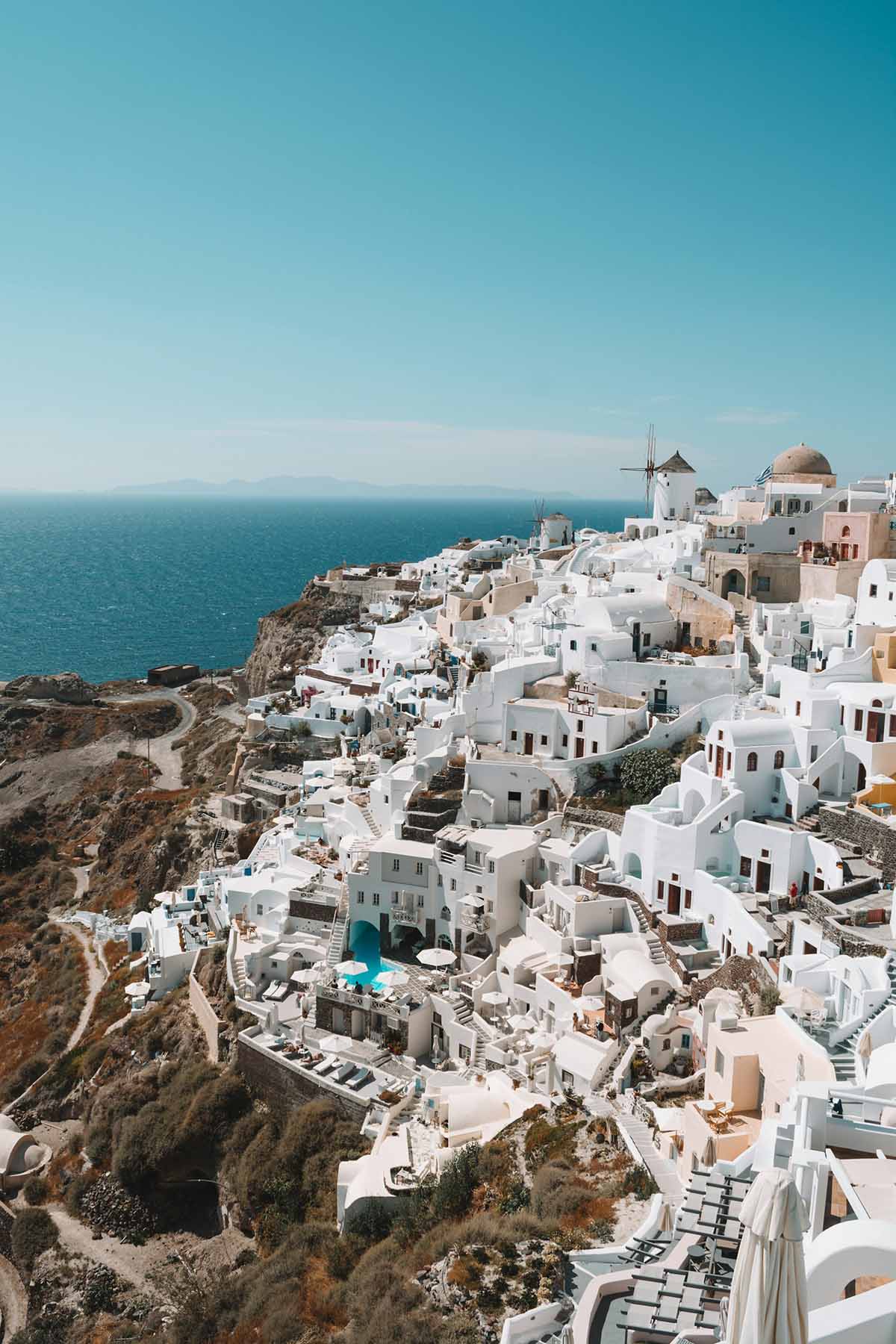
Start your Oia sunset early. Arrive at least 90 minutes before sunset to claim a spot at the castle ruins, or at a caldera-view bar. The village gets paralyzed with foot traffic after sunset — getting back to where you parked or catching a bus can take 45 minutes longer than expected.
Don’t flush toilet paper. This applies across Greece and particularly in Santorini. Bins next to the toilet. The plumbing isn’t designed for it.
Cash is still essential. KTEL buses are cash only for tickets. Many small tavernas and parking spots don’t take cards. Carry small bills.
Book accommodation early. Caldera-view rooms in Oia and Fira sell out months in advance for July and August. If budget is a concern, staying at Perissa or Kamari (on the east coast, closer to beaches) is significantly cheaper — €80–120/night for good guesthouses — versus €300+ for caldera views in Oia.
Taxi to Oia from the port costs €65. Ferry travelers should know this going in.
Beware the cable car queue. During peak season, the cable car from Fira down to the old port can have a 45-minute wait. Walking the 587 steps down is actually faster (and shadier in the morning going down) than waiting. The cable car costs €10 each way.
The earthquake context. Early 2025 brought a series of seismic events around Santorini, causing temporary concern. Everything returned to normal by March, and the island had a quieter-than-usual summer season — which, for visitors, meant slightly more breathing room than typical.
You don’t need to flush the tourist bucket list. The iconic spots — Oia, Red Beach, the volcano — are iconic for real reasons. But if you add a village like Pyrgos, a winery in the afternoon, and Vlychada Beach, you’ll get a more complete picture of the island with far fewer people around you.
Santorini isn’t cheap, but it’s manageable with the right approach.
Visit in May, June, or September. Accommodation, car rentals, and tours can be 30–50% cheaper than August rates. Car rental, for example, averages €20/day in May vs. €66/day in August.
KTEL bus discount. Some listings mention a promo code “buspromo” for a 10% discount on adult KTEL bus tickets at the Fira station ticket desk.
Book tours directly with local operators. Caldera’s Boats, Spiridakos Sailing Cruises, and Volcano Yachting Santorini are local operators who offer similar tours to what you’ll find on GetYourGuide and Headout, often at lower prices. Walking down to Fira’s old port and booking in person the morning of is a legitimate strategy, especially in shoulder season when boats have availability.
Ferry over flight from Athens. The conventional ferry from Piraeus costs significantly less than a flight and is a genuine experience if you have the time.
Stay east, not caldera. Perissa and Kamari on the east coast offer the most affordable accommodation on the island. The 20-minute bus to Fira is simple enough that staying in these areas doesn’t feel like a compromise.
Lunch over dinner. Every caldera-view restaurant on the island charges premium prices at dinner. The same view, the same food, and a 30–40% lower price at lunch. This applies especially to the most famous spots in Oia and Fira.
Wine tasting at smaller wineries. Santo Wines is the famous one, but the island has 21 wineries and many smaller ones offer tastings at much lower prices. Sigalas, Domaine Sigalas, and Hatzidakis offer intimate experiences that regulars consistently prefer.
Some honest snapshots from travelers:
One TripAdvisor reviewer who visited Oia’s sunset spot in September 2025 described it as genuinely beautiful but acknowledged that finding your own space among the crowd requires patience and some footwork. The general consensus: the experience is real, but so is the crowd pressure.
A traveler writing about their Santorini boat tour noted:
“The guide knew their stuff. Bring a hat, bring water, and wear shoes you can actually walk in — the volcano hike is more climbing than most people expect.”
A reviewer on Wanderlog summed up the ATV rental experience this way:
“Generally speaking, touring Santorini with an ATV is a great choice. There are many places that rent these machines. You get what you pay for.” The lesson: spend a few minutes checking the vehicle before you drive off.
From a Chinese travel community reflecting on 2025 costs:
“€150/person for a cliffside sunset dinner on Santorini, €100/day to rent a car — the costs are real, but the sunset and the caldera views are not Instagram fiction.”
The general takeaway was that managing expectations about cost and avoiding tourist traps (stick to local tavernas, not the first restaurant you see with a view) makes a big difference.
The Reddit travel community broadly agrees on one thing: the tourists who have the best time in Santorini are the ones who treat Oia and Fira as highlights within a fuller itinerary — not the whole destination. The inland villages, the wineries, the less-known beaches, and a boat tour on the caldera are what turn a crowded holiday into something that actually stays with you.
Santorini is not a secret. It never will be again. But go at the right time, stay somewhere comfortable without obsessing over the caldera view, and actually get out to see the volcano — it’s better than any photograph.
Last updated: June 2026. Prices and schedules are estimates based on current research and are subject to change. Always verify current rates directly with operators before booking.