
Get Weekly Travel Inspiration Straight to Your Inbox




100+ subscribers
Join 100+ subscribers who receive our curated destination picks, flight deal alerts, and exclusive travel guides — every Thursday.


A no-fluff guide covering prices, tours, dress code, skip-the-line options, and the real tips that make a difference.
Seven million people visit the Vatican Museums every year. On a summer morning, that queue stretching down Viale Vaticano is not a mirage. It is two hours of your holiday standing on hot Roman pavement, and you haven’t even reached the ticket desk yet.
The good news is this is one of those situations where a bit of prep genuinely solves the problem. Book online, pick a sensible time slot, and you walk past the crowd. It takes about ten minutes to sort out.
One thing worth knowing upfront: since 2024, the Vatican has been pushing hard for online pre-booking, and popular slots in summer fill weeks in advance. If you’re travelling around Easter or during the 2025 Jubilee year (which has pulled even bigger crowds than usual to Rome), treat booking as something you do the moment you know your travel dates.
The Museums are at Viale Vaticano 6, inside Vatican City, which sits along the west bank of the Tiber. Despite being a separate sovereign state, there’s no border crossing to deal with. You just walk in.
Metro Line A is the easiest way to get there. Get off at Ottaviano or Cipro and you’re about ten minutes on foot from the entrance. A metro ticket is €1.50. Bus line 49 drops you right at the door if you’d rather not walk. From Termini Station, the 40 and 64 both head that way and run frequently.
If you’re based near the historic centre, Ponte Sant’Angelo is worth walking across. It’s one of the nicest bridges in Rome and puts you at the door in about twenty minutes from Piazza Navona.
Taxis are easy to find, and from central Rome you’re typically looking at €12 to €18. Coming from Fiumicino airport, take the Leonardo Express train to Termini (€14) and then Metro Line A to Ottaviano. Door to door it’s around 45 minutes.
The price structure is fairly simple once you know it. The official Vatican Museums website (tickets.museivaticani.va) is where the baseline tickets live:
| Ticket Type | Price | Notes |
|---|---|---|
| Standard Adult (online) | €17 + €5 booking fee = €22 | All museums and Sistine Chapel included |
| Reduced (students and children 6–18) | €8 + €2 booking fee = €10 | Requires a valid student ID |
| Children under 6 | Free | No booking required |
| Disabled visitors (67%+ certified) | Free | ID required; reserve by email |
| Last Sunday of the month | Free | Reduced hours; genuinely massive crowds |
| Official guided tours | From €35 up to €100+ | Multiple options through the official site |
That €5 booking fee is worth it. Without it you’re joining the walk-up queue, which from March to October can run past two hours. Pay the fee and you skip that part entirely.
The official Vatican site is the most direct route. Tickets open 60 days out, slots start from 8 AM in 30-minute windows, and the standard ticket at €22 covers the full permanent collection including the Sistine Chapel. The main catch is that standard tickets are non-refundable — you can reschedule, but you can’t get your money back.
GetYourGuide Vatican tickets work differently and are genuinely worth considering. The platform works with licensed local operators who have dedicated priority-entry lanes. These are actually faster at the door than even the pre-booked Vatican website queue. Prices sit around €32 to €45 for timed entry, so you’re paying a bit more, but you also get free cancellation up to 24 hours before. For anyone with kids, a slightly unpredictable schedule, or who just wants that safety net, the extra cost makes sense. GetYourGuide also handles guided tours, small-group options, and combo tickets that include the Colosseum.
Buying on the day is technically an option. But there are three separate queues at the entrance: one for walk-ins, one for people who pre-booked online, and one for fast-track guests. In peak season the walk-in queue is the longest by far, and during busy periods spots genuinely run out before midday.
One thing to watch out for: the street outside the Museums is lined with people selling tours and tickets, and while many are legitimate third-party operators, some are not. If someone approaches you before you’ve reached the entrance, the safest move is to politely decline and buy through a platform you already know.
This phrase gets thrown around a lot in travel marketing, so it’s worth being clear about what it means here specifically.
When you book through the Vatican’s own website, you skip the ticket-purchase queue. You still go through security screening, which on a busy day can take anywhere from 10 to 30 minutes. There’s no way around security — that applies to everyone.
When you book a fast-track option through GetYourGuide or a guided tour, you get access to a priority entry lane. This moves you ahead at both the ticket validation point and the security funnel, so you’re inside noticeably faster.
The most crowd-free experience is an early-morning tour that starts before public opening. The Vatican’s own “Prime Experience” is one of these, and it begins before 8 AM when the Museums are still quiet. These tours cost significantly more (typically €100 or above per person), but if your main concern is experiencing the Sistine Chapel without shoulder-to-shoulder crowds, that’s the ticket.
The Vatican Museums cover 54 galleries and stretch over nine miles of corridors. How you choose to navigate that makes a real difference to what you get out of the day.
Self-Guided Entry (€22 online) works best if you’ve been before or you’re someone who likes moving at their own pace without a group. Download the official Vatican Museums app before you go — it has a solid offline map and covers the highlights well. You can find the Raphael Rooms, Gallery of Maps, and Sistine Chapel by following the flow of the crowd, but without context, a lot of what you’re looking at can feel like very impressive decoration.
Audio Guide (around €8 as an add-on) is the sensible middle option. Covers the highlights in two to three hours and returns at the exit. If you’ve got a decent knowledge of the Renaissance already and are mainly there to see the space, this is probably enough.
Guided Group Tours (€35 to €60, through GetYourGuide or the official site) are what most first-time visitors should probably do. Groups are up to 20 people and a licensed guide takes you through the highlights in two to three hours. A good guide changes the Sistine Chapel from a crowded room with a famous ceiling into something genuinely moving. Try to find a small-group option — anything under 15 people tends to be a better experience.
Early Access and VIP Tours (€100 to €150+) start before the public is admitted and are capped at small numbers. Some include breakfast in the Pinecone Courtyard. Reviews consistently describe these as the way to experience the Sistine Chapel as it was meant to be seen: quietly, with space to look up.
The Keymaster Tour (€200+) is for the serious enthusiast. You enter at 6 AM with the staff, before the lights in the Sistine Chapel are even switched on. Limited to around 20 people and books out months ahead.
For the main highlights — Raphael Rooms, Gallery of Maps, Sistine Chapel — set aside two to three hours minimum. If you want to include the Pinacoteca art gallery, the Gregorian Egyptian Museum, or the Etruscan collection, you’re looking at four to five hours comfortably.
The Museums close at 7 PM, with last entry at 6 PM. On selected Friday and Saturday evenings from late April through October, they stay open until 10:30 PM, which is actually a lovely time to visit.
If you’re also planning to see St. Peter’s Basilica (free to enter, separate queue), leave a full day for Vatican City. Some guided tours include a private passage from the Sistine Chapel directly into the Basilica, which cuts out the outside queue entirely.
November, February, and early March are genuinely the best months to go. Fewer people, milder temperatures, and you can actually stand still in a gallery and look at something properly.
As for time of day, either first thing at 8 AM or mid-to-late afternoon around 3 or 4 PM on a weekday. The stretch between 10 AM and 2 PM tends to be the most chaotic. One travel writer who visited in spring noted arriving at 3:30 PM and finding no lines at all, calling it the single most important timing tip she could give.
Weekends are busier regardless of the season. Public holidays more so. The last Sunday of the month, when entry is free, can feel overwhelming unless you arrive before 8 AM.
A note for 2025 and 2026 specifically: Rome is in the middle of Jubilee 2025, a Catholic Holy Year that brings millions of additional pilgrims to the city. Crowds are heavier than they’d normally be. Book earlier than you think you need to.
The Vatican enforces its dress code and the guards at the entrance do actually check. Getting turned away after queuing with a valid ticket is an easily avoidable situation.
Shoulders and knees need to be covered. No sleeveless tops, no shorts above the knee, no miniskirts. Hats need to come off inside. Nothing sheer, ripped, or with offensive imagery.
Practically speaking: jeans are fine, knee-length leggings are fine, sandals are fine. Flip-flops are technically allowed but you’ll be walking three to five miles, so comfortable shoes are worth prioritising. Heels on Vatican museum floors are genuinely not recommended.
The easy summer solution is a light scarf or pashmina in your bag. You can throw it over your shoulders or wrap it around your waist in thirty seconds. If you forget or get caught out, vendors along Ottaviano Street sell cover-ups right outside the entrance.
Children under 6 always get in free. Students aged 6 to 25 with a valid ID qualify for the reduced ticket at €8. Certified disabled visitors and their companions enter free, as do ICOM cardholders and clergy with valid identification.
The last Sunday of every month is free entry, running 9 AM to 2 PM with last entry at 12:30 PM. It works and it’s legitimate, but you need to arrive before 8 AM to have a manageable experience. Not the most relaxing way to spend a morning in Rome, but if budget is the priority, it’s doable.
If you’re spending several days in Rome and planning multiple major sites, look at combo passes on GetYourGuide or Tiqets that bundle the Vatican with the Colosseum and Roman Forum. The savings add up and you only have to deal with one booking for everything.
One slightly under-the-radar option: booking a Vatican Gardens guided tour includes Museums entry automatically, so if the Gardens were already on your list, you’ve just solved two things at once.
In summer, book three to four weeks ahead. For shoulder season, a week is usually enough. Slots officially open 60 days out and the popular Saturday morning windows in July fill fast.
Your ticket name needs to match your ID. The Vatican is specific about this, and “Bob” when your passport says “Robert” can cause friction at the door.
Photography is fine throughout the Museums without flash. The Sistine Chapel is the exception — no photos, no exceptions, and the guards are attentive about it. Selfie sticks and tripods are off-limits everywhere.
The Pinacoteca gallery is genuinely undervisited. It holds Caravaggio, Leonardo, and Raphael, and most tour groups walk straight past it on their way to the main circuit. It’s worth thirty minutes of your time.
Download the official Vatican Museums app before you leave your accommodation. It works offline, which matters in some of the lower-lit sections where signal drops.
Leave large bags at home or check them at the free cloakroom near the entrance. Going through the bag check with an oversized backpack at 8 AM when everyone else is doing the same slows everyone down.
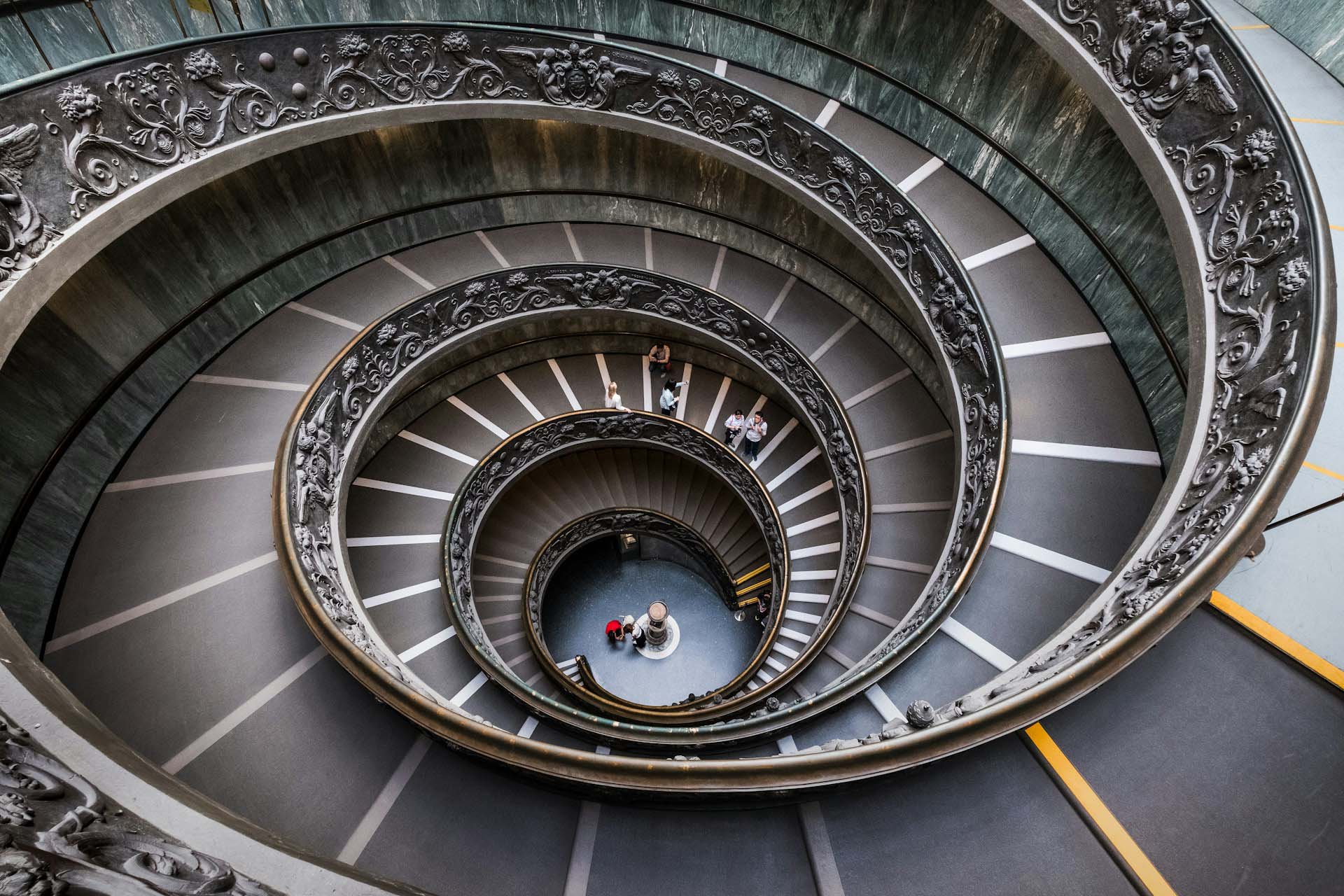
Finally, the spiral staircase near the exit. It was designed by Giuseppe Momo in 1932 as a double helix, and it’s a remarkable piece of engineering in its own right. Most people rush past it. Don’t.
The gap between a great Vatican experience and a miserable one tends to come down to one thing: whether or not you had a plan.
On TripAdvisor and across threads on r/Rome and r/travel, the unhappy reviews follow a familiar pattern. Someone bought a general ticket, arrived mid-morning in summer, and spent the day wedged between competing tour groups. One review coined the term “Sardine Chapel,” which has become something of a shorthand in those communities. Another described it as the worst experience in thirty-plus countries of travel. Both were visitors who went in without a booked time slot in peak season.
The reviews from people who planned even a little are completely different in tone. The early-access tours consistently get described as among the best cultural experiences in Rome. One visitor who booked a before-opening tour with breakfast wrote that they felt like the only people in the building. Another pair of travel writers who’d done the Museums once with a walk-up ticket in July and again with a guided small-group tour in May said the two visits felt like entirely different places.
The Reddit community tends to give pretty consistent advice to anyone asking before a trip: book well ahead for summer, go early or go late, avoid midday, skip the street vendors, and if it’s your first visit, seriously consider a guided tour rather than going it alone. The free last-Sunday deal is real, but you need to be there at opening or you’re gambling with your morning.
The Museums themselves are extraordinary. Michelangelo’s ceiling in the Sistine Chapel, the Raphael Rooms, the Gallery of Maps — these are things people genuinely remember long after the trip. The place deserves to be experienced properly, and the barrier to doing that is just a bit of advance planning.
Official bookings: tickets.museivaticani.va | Third-party options including fast-track entry: GetYourGuide, Tiqets